

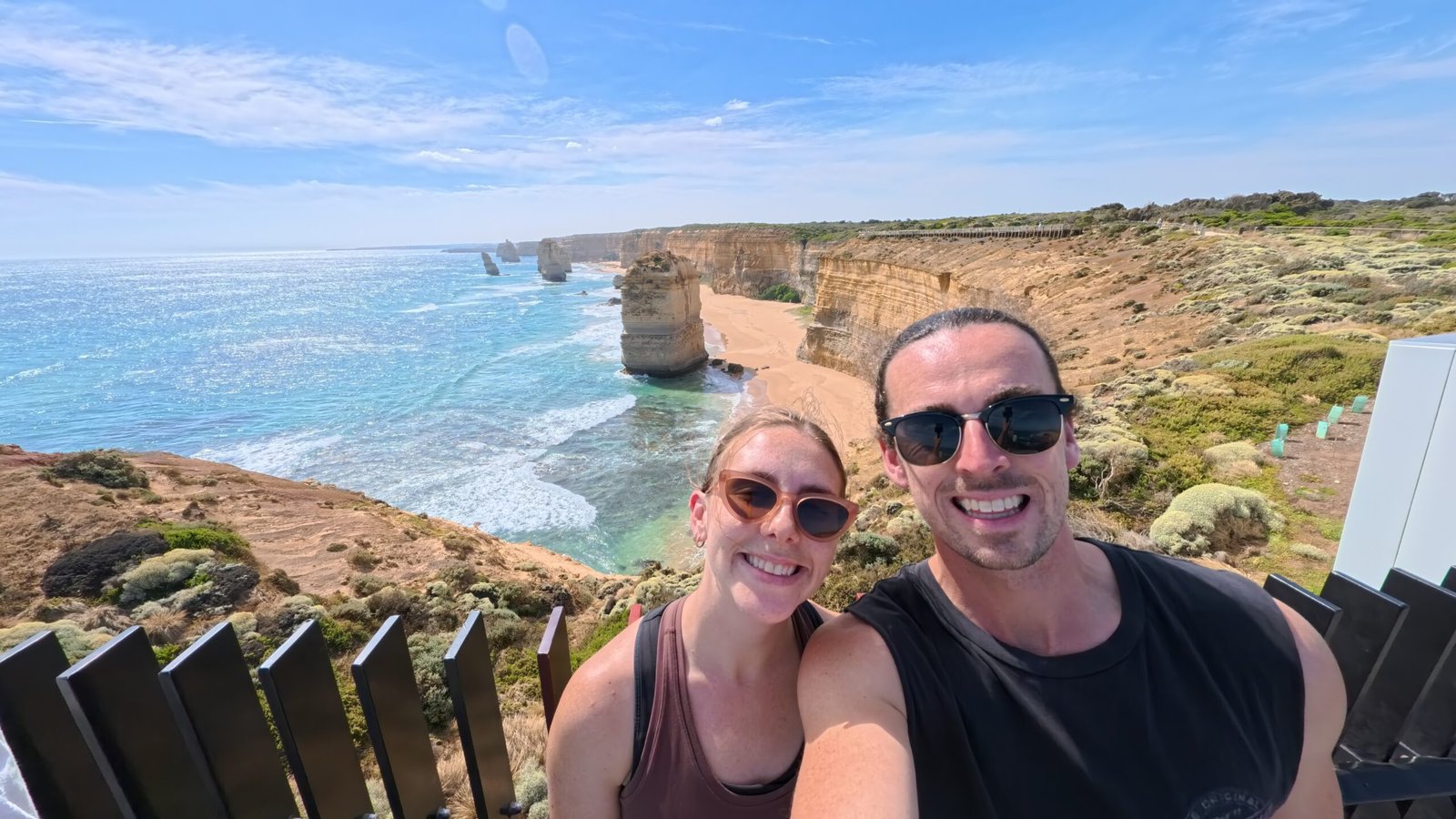
Lucky and unlucky
To say that we had been unlucky in our first week of the trip would be an understatement.
Our solar system in the van failed. We were hit with relentless wind. Emily’s nan passed away. And to top it all off, our very first bucket list item, the Great Ocean Road, had just been hit by what was described as a once in a lifetime flood.
To put it into perspective, cars were being swept out to sea from the exact campground we had booked to stay in. Safe to say, I was feeling pretty low.
Up until this point, Emily had been saying that we were lucky unlucky people. When our solar failed, friends who were coming to visit were able to bring us a replacement. Lucky unlucky. When her nan passed, as heartbreaking as it was, we were not far from home and could make it back to be with family. Lucky unlucky. And then, after the Great Ocean Road had been closed for three days due to flooding, we received a notification the night before we planned to leave saying the road would reopen as normal.
Lucky. Unlucky.
Starting Australia’s most famous road
We left our friends’ house in Melbourne around six in the morning on Sunday, hoping to beat the traffic. Driving through Geelong, we reached the start of the Great Ocean Road at Torquay, and from the very beginning it delivered.
Within the first hour there were endless places to pull over, lookout points begging for a stop, and that feeling that this drive was going to be something special.
Our first stop was the famous Bells Beach before heading to the lesser known but highly recommended Point Addis. Point Addis completely blew us away. The cliffs, the beaches, and the colour of the water are things that need to be seen to be believed. It was somewhere we wished we had more time to explore.
Round the Twist
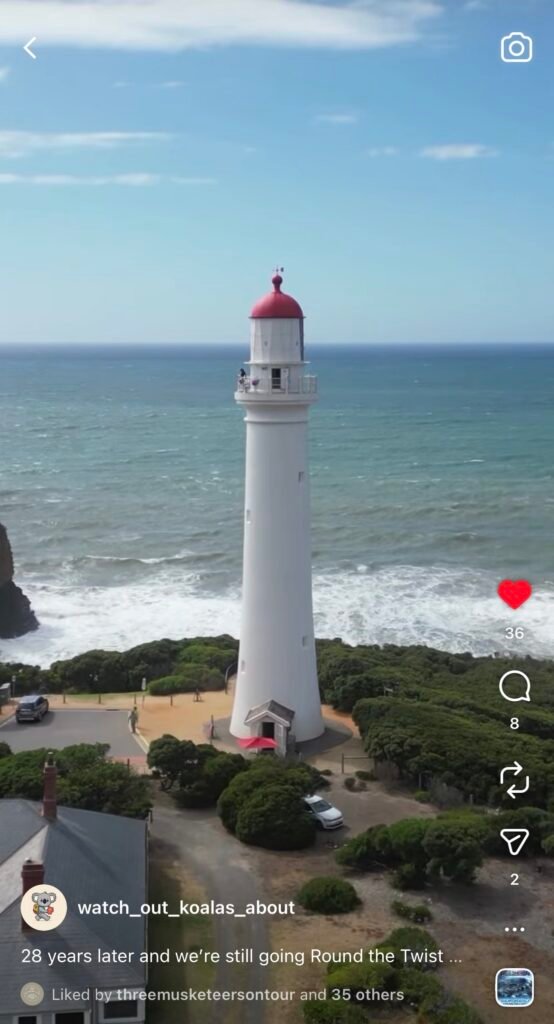
It would not have been a true Australian Great Ocean Road trip without stopping at the Aireys Inlet Lighthouse, better known as the lighthouse from the ABC show Round the Twist.
Growing up watching the show, Emily and I were instantly taken back to our childhoods. We even had some fun filming our own version before continuing on.
The Memorial Sign
Leaving the lighthouse, we made the short drive to the famous Great Ocean Road memorial arch. Seeing it in person, it was much bigger than expected. Before arriving, I had imagined driving the van through it a few times while flying the drone.
When we arrived, reality hit. There were so many people that it almost made the experience unbearable. Instead, we headed down to the beach nearby and managed to get the drone up from there. We did not get the exact shot we wanted, but it was still worth stopping.
The most scenic part of the Great Ocean Road road trip
This is where the Great Ocean Road truly began for me. Spectacular winding roads carved into the side of the cliffs, with the ocean stretching endlessly below. We had been told that traffic could be slow due to tourist buses and caravans, but because of the flooding, buses had been diverted and many travellers could not reach their campsites.
Ironically, we were the slowest car on the road.
After passing through stunning viewpoints and the town of Lorne, I finally found a legal spot near Apollo Bay to get the drone out. The Great Ocean Road sits within a national park, so flying is restricted, but there is a small area just before Apollo Bay where it is allowed. This resulted in a very abrupt pull over and me testing my flying skills.
Following that, we rolled into Apollo Bay and stopped for fish and chips by the water.
From ocean to forest
One thing that really surprised us was how the road leaves the coastline after Apollo Bay and heads inland through dense forest. This section of the drive takes about an hour and a half and feels completely different to the coastal stretch.
It is quiet, green, and unexpectedly beautiful. This is not a part of the journey to rush. Slow down and take it all in.
The Twelve Apostles
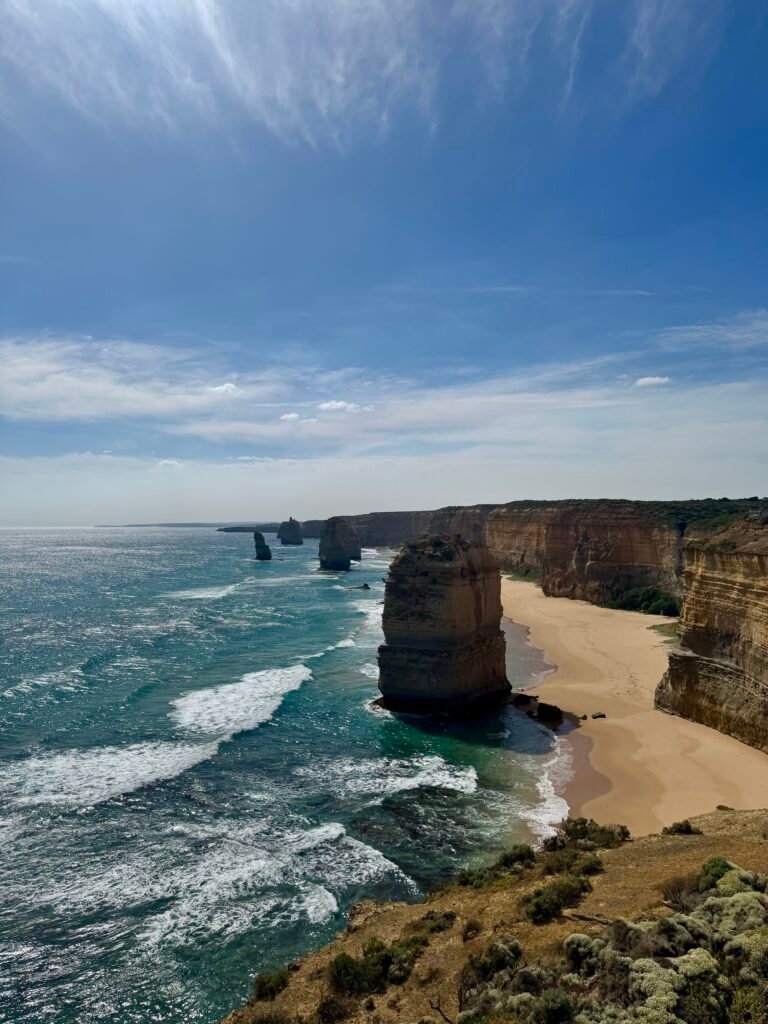
After exiting the forest, we reached the first major landmark, the Twelve Apostles.
We had planned to go straight to our campsite as the day was getting on, but with so few people around, we decided to stop. Before heading there, we pulled into Gibson Steps, just a short drive away. The view was incredible, and you even get a glimpse of one of the Apostles without the crowds.
At the information centre, the site itself was beautiful, but the centre felt outdated and lacked meaningful information, particularly around the Indigenous history of the area, which was disappointing. It was also our first real encounter with the flies, and they were everywhere.
Standing on the viewing platform was still unforgettable. There was something calm and almost magical about watching the waves crash against the limestone cliffs.
Best tip for the Twelve Apostles
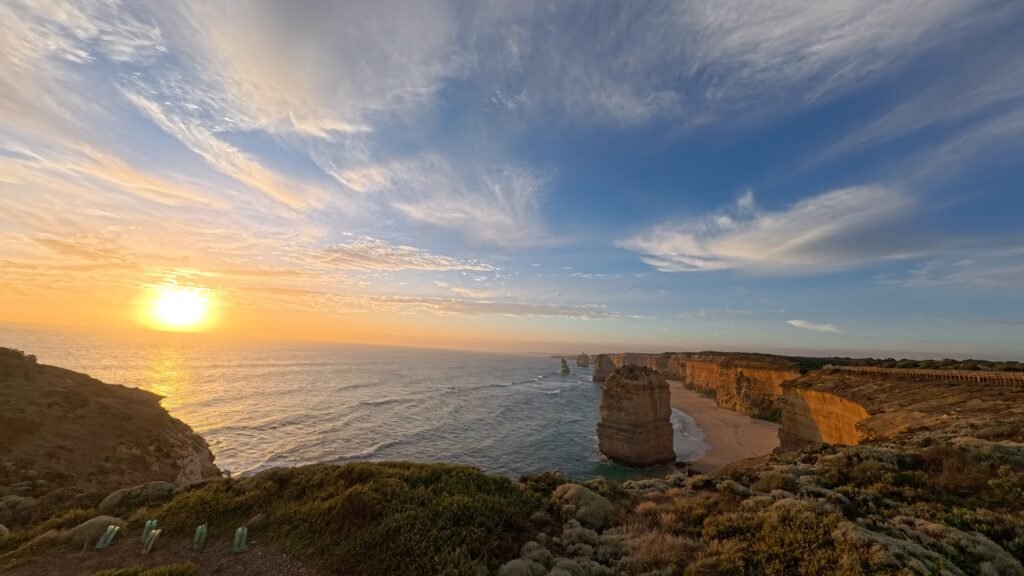
One of the best tips we received came from a woman at the Apollo Bay information centre. She suggested visiting the Twelve Apostles at sunset.
She was absolutely right. The tour buses were gone. The flies disappeared. As the sun dropped, the rocks absorbed deep oranges, reds, and pinks, making the whole place feel even more special.
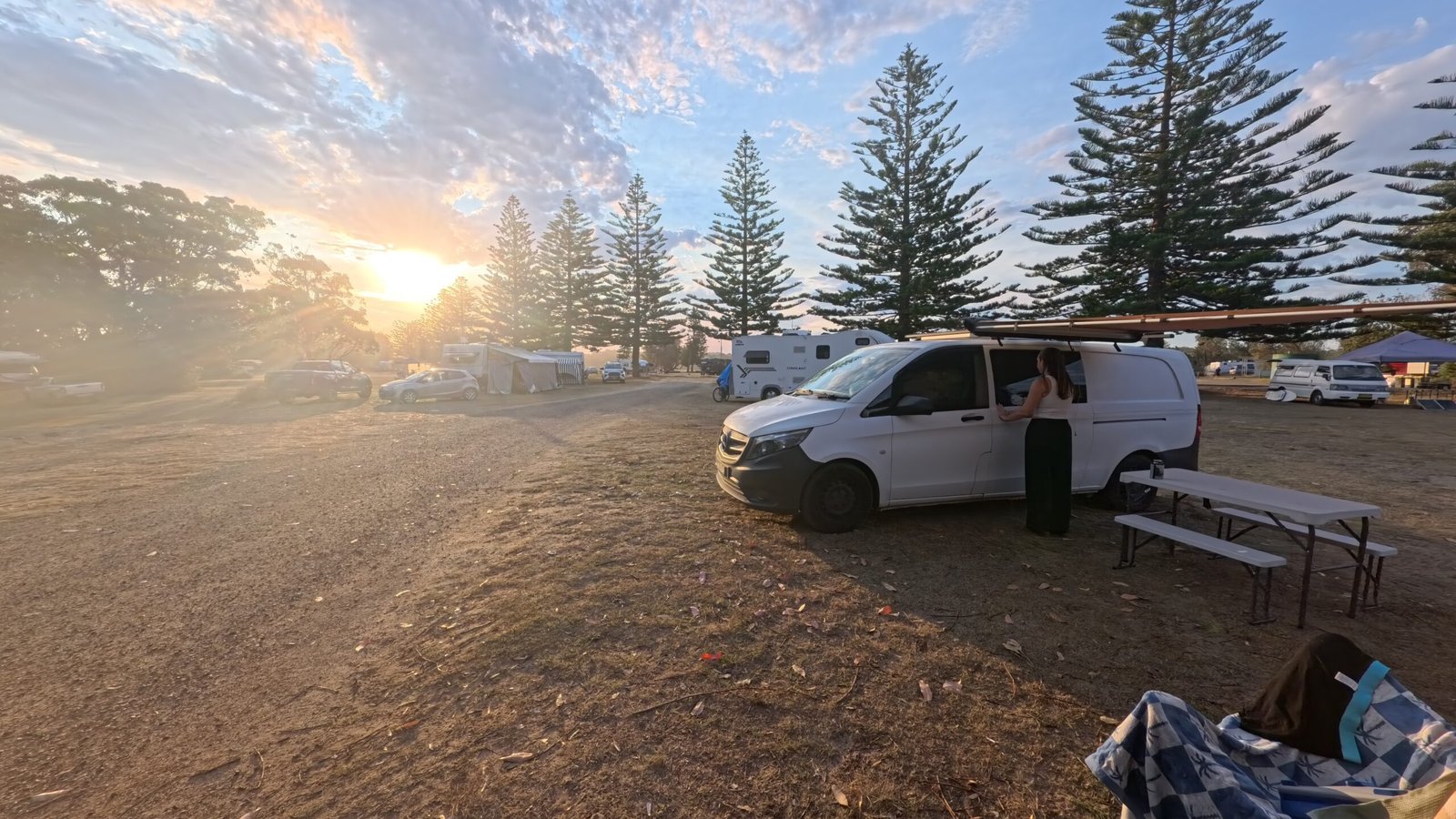
We left with a sense of calm and made our way back to camp for one of the most peaceful nights of the trip so far.
The landmarks of the Great Ocean Road
The following morning, we set off early with the plan of seeing more of the major stops before continuing toward South Australia. Our map suggested this section would take around an hour and a half. With stops and photos, we thought two and a half hours would be plenty.
We were very wrong.
With almost no crowds early in the morning, we found ourselves slowing down and spending more time at each stop. For the first two locations, we were completely alone.
We stopped at:
- Loch Ard Gorge
- Mutton Bird Island
- Thunder Cave
- Sherbrooke River
- The Blowhole
- Port Campbell
- London Bridge
- The Grotto
- Bay of Martyrs
- Bay of Islands
- Childers Cove
What we expected to take a couple of hours turned into four and a half, and even then, it felt like there was still more to see.
If only there was more time
There is simply too much along the Great Ocean Road to do it justice in a rush. Even with our plans blowing out, it felt like a hugely successful first bucket list item ticked off as part of what we hope will be an adventure of a lifetime.
Lucky. Unlucky.
But mostly, just grateful that we got to experience it the way we did.
Conclusion
If you enjoyed our Great Ocean Road trip and want to see our other adventures, make sure you explore our other posts on Our Journey page. Here we share the full story behind each leg of our travels, including what worked, what didn’t, and what we would do differently next time. We have also documented this section of the trip on video, so if you prefer to see it all in motion, you can watch our Great Ocean Road vlog here and experience the drive, the landmarks, and the moments in between for yourself.
Pingback: Esperance and Cape Le Grand National Park Travel Guide